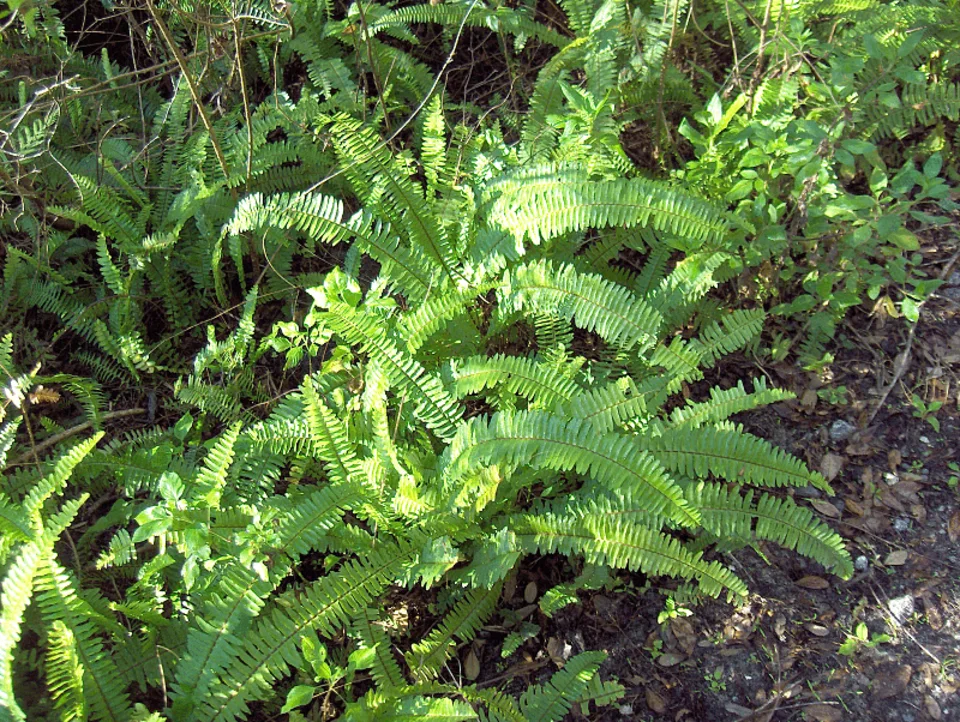
Boston fern
Nephrolepis exaltata
Dionaea muscipula
A leaf with a very different job.
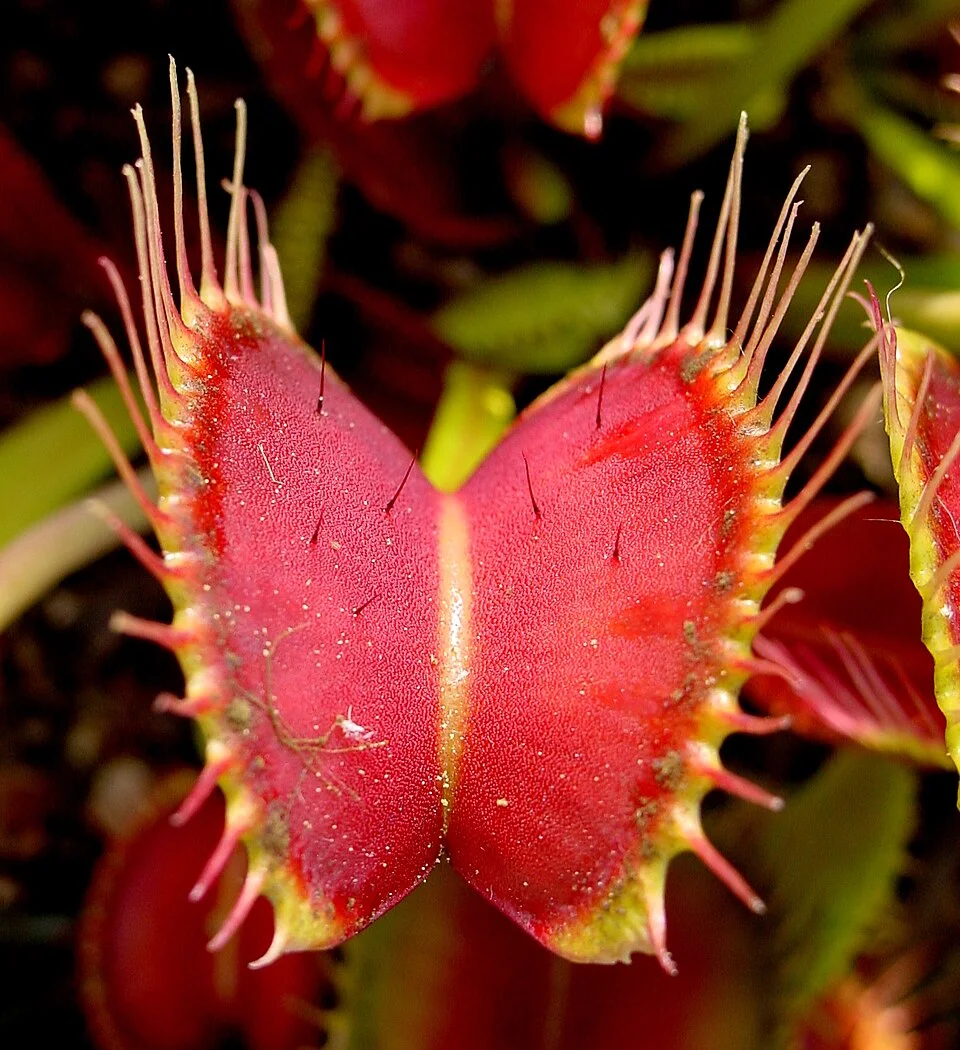
The slender hairs on the inside of the trap respond to contact. They are different from the much longer tooth-like projections along the edge.
Look along the edge for the long projections that interlock during closure. They frame the two lobes of this specialised leaf.
The central hinge divides the open trap into two lobes. This structure is a modified leaf, rather than a flower.
In the nutrient-poor wetlands of the Carolinas, a modified leaf can capture small animals. Sensitive hairs on the inside of the trap help trigger closure. Captured prey provides nutrients that are scarce in the soil.
Look for the trigger hairs inside an open trap and the tooth-like projections around its edge. The trap is part of a leaf, rather than a flower.
What changes when a leaf becomes a trap?
Observe without repeatedly triggering a living trap. A photograph or diagram is enough to study its structure.
Habitat labels are broad browsing categories, not complete distribution records. This dossier is an editorial introduction, not original field research.
Noah Elhardt. Original photograph · CC BY-SA 2.5. Resized and converted to WebP; displayed crops may vary.