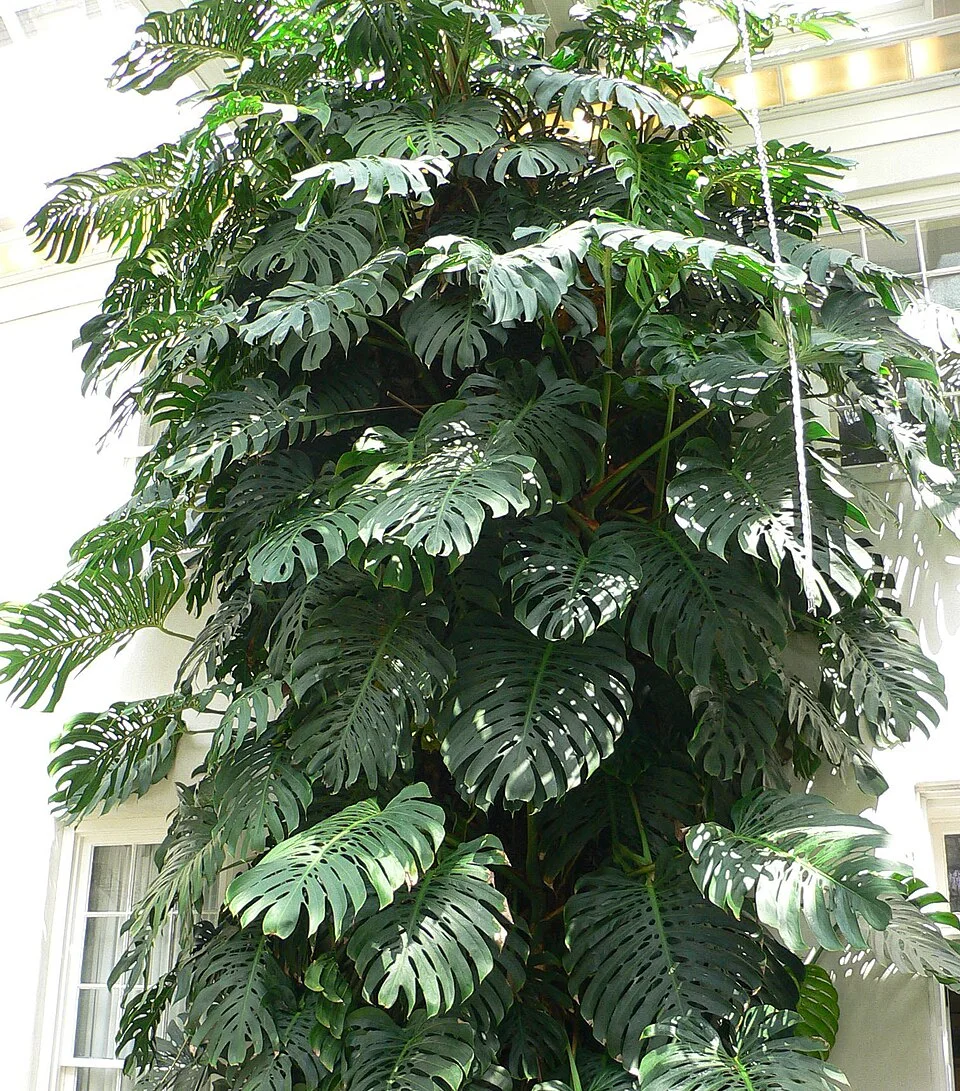
Monstera
Monstera deliciosa
Nephrolepis exaltata
A whole world beneath a frond.
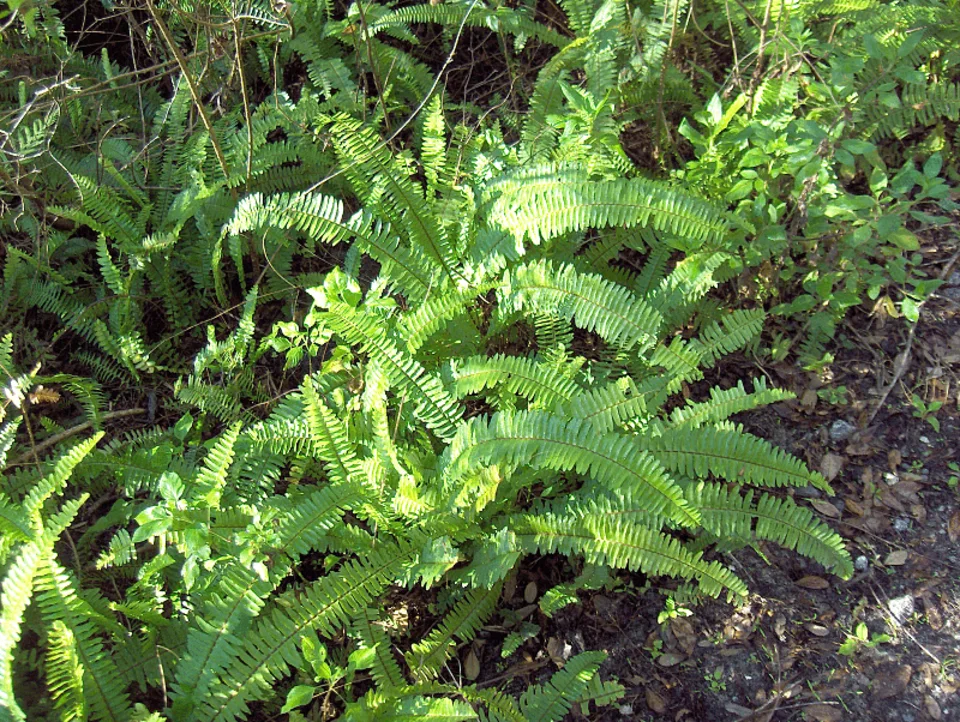
Follow an arching frond from its base to its tip. Although it looks like a small branch, the entire divided structure is one leaf.
Look at the smaller divisions arranged along the central axis. These are the pinnae. Their repeated pattern gives the frond its familiar silhouette.
The photograph shows the upper surfaces. To investigate sori, you would need a clear view of the underside of a fertile frond. The image alone cannot establish their presence.
Look beyond the familiar arch of a fern. On fertile fronds, clusters called sori contain the structures that produce spores. This is a different reproductive story from the seeds and flowers we tend to notice first.
Follow the central axis of a frond, then look at the repeating leaflets on either side. A frond is a leaf, even when its divided shape makes it look like a branch.
What do you notice when you turn a frond over?
Observe the underside without rubbing or removing any structures. Not every frond will carry visible sori.
Habitat labels are broad browsing categories, not complete distribution records. This dossier is an editorial introduction, not original field research.
Homer Edward Price. Original photograph · CC BY 2.0. Resized and converted to WebP; displayed crops may vary.